
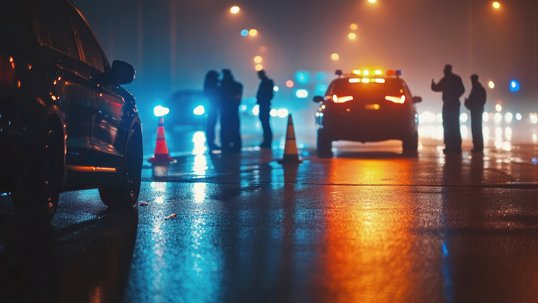
Stopping at a DUI checkpoint isn’t the same as agreeing to every test an officer requests. In California, a driver must stop at a properly marked checkpoint, but voluntary roadside tests are different from the chemical test required after a lawful arrest.
Those rules matter during holiday weekends and other periods of increased enforcement across Sacramento County. Knowing where one stage ends and another begins can clarify what an officer is requesting and what consequences follow.
Arrested at a Sacramento County DUI checkpoint? Let the defense attorneys at Walsh Law review your stop and protect your rights. Call (916) 610-3558 or contact us online.
When California Sobriety Checkpoints Are Constitutional
DUI sobriety checkpoints are legal in California, but they aren’t unrestricted stops. In 1987, the California Supreme Court established the governing framework in Ingersoll v. Palmer. Courts must evaluate whether a checkpoint limits arbitrary enforcement and unnecessary intrusion on drivers.
No single detail determines whether a checkpoint is constitutional. Courts consider the overall procedure, including:
- Whether supervisory personnel, rather than officers in the field, made operational decisions.
- Whether officers used neutral criteria to select vehicles, such as stopping every car or every third car.
- Whether the location, safety setup, visibility, duration, and detention time were reasonable.
- Whether signs, lighting, uniformed officers, and marked vehicles made the checkpoint appear official.
Advance publicity is another factor under Ingersoll. However, People v. Banks held that a lack of advance notice doesn’t automatically make a checkpoint unconstitutional. A legal review considers the full operation, not simply whether someone saw a public announcement before the stop.
Stopping at a Posted Checkpoint
California Vehicle Code § 2814.2 requires drivers to stop and submit to an inspection when signs and displays direct them to do so. During the initial interaction, an officer often observes the driver, asks basic questions, and looks for indications that could support further investigation.
A driver may turn away before reaching the checkpoint if the maneuver complies with traffic laws and doesn’t create a safety hazard. Under Ingersoll, an illegal turn, unsafe movement, or obvious sign of impairment can give an officer an independent reason to make a stop.
A short screening can become a longer encounter if an officer claims to observe signs of impairment. Stop safely when directed, provide the information the officer lawfully requests, and don’t assume that the initial stop gives officers unlimited authority to extend the detention.
Roadside and Chemical Tests Follow Different Rules
The key distinction is between voluntary testing before an arrest and chemical testing after one. Declining a voluntary roadside test doesn’t prevent an arrest, and it isn’t the same as refusing a test required under California’s implied-consent law.
- Field Sobriety Tests: These physical and divided-attention exercises include walking a line or standing on one leg. They’re voluntary. Officers still need probable cause, meaning sufficient facts to support an arrest for suspected DUI, before taking a driver into custody.
- Preliminary Alcohol Screening Test: A preliminary alcohol screening test, often called a PAS test, is administered with a handheld roadside breath device before an arrest. For most drivers age 21 or older who aren’t on DUI probation, the test is voluntary under California Vehicle Code § 23612(h) and (i). The officer must advise the driver of the option to refuse it, and declining carries no separate penalty in those circumstances.
- Chemical Testing After Arrest: California’s implied-consent law requires a person lawfully arrested for DUI to submit to a chemical breath or blood test. A first refusal after arrest can result in a one-year DMV license suspension, separate from the criminal case.
The timing and wording of an officer’s requests matter. A review should consider when each test was requested, what advisements the officer gave, and how the test was administered.
After a Checkpoint Arrest: The DMV Deadline and Evidence Review
A checkpoint arrest starts two separate processes: the criminal case and the DMV administrative process affecting driving privileges. Each follows different procedures, and an issue in one doesn’t automatically resolve the other.
In California, a driver generally has 10 days after a DUI arrest to request a DMV Administrative Per Se hearing. Missing that deadline can lead to an automatic suspension of driving privileges, so the arrest paperwork and date should be reviewed immediately.
A defense review can examine how law enforcement planned and operated the checkpoint. Relevant questions include whether supervisors established neutral vehicle-selection criteria, officers kept the stop appropriately brief, and the operation had the safety measures and official visibility required under Ingersoll.
Testing evidence requires separate attention, including the administration of roadside exercises and the maintenance and calibration records for breath-testing equipment. Records concerning the checkpoint encounter, arrest, chemical test, and DMV notice should be preserved early rather than assumed to be routine.
Knowing the difference between an initial screening and an implied-consent request after arrest helps explain what happened, but an arrest also creates immediate deadlines and evidence questions. Walsh Law’s work is led by Chris Walsh, a former Chief Assistant District Attorney and prosecutor with more than 19 years of legal experience and more than 100 jury trials personally tried.
For DUI defense in Folsom and throughout Sacramento County, contact us at (916) 610-3558 to discuss the next steps.